A fuel-price display is easy to photograph. Understanding what it means for a household budget takes more care. The question behind my post from Italy remains useful: how much of our income does everyday transport absorb?
A dated official reference
On 15 October 2026, Italy’s Ministry of Enterprises and Made in Italy listed national self-service diesel averages of €2.254 per litre on the road network and €2.270 on motorways. These are averages, not a quote from every station. Source: MIMIT’s national fuel-price table.
For an illustrative 50-litre fill, those figures imply €112.70 and €113.50 respectively. This is simply price multiplied by volume; it says nothing about how far a particular car can travel.
What a fair comparison needs
A comparison with Kosovo should use the same fuel, date and service type. An annual increase also needs a documented starting price from the corresponding period. Without that matching evidence, a percentage can sound precise while describing two different things.
The useful household calculation is more direct: litres used each month multiplied by the price actually paid. Compare that expense with take-home income, alongside the other costs of getting to work and caring for a family.
I want to keep that practical question in focus. A dated price and a clear calculation tell us more than an unsupported headline comparison.
Fact-check update: 15 October 2026. The original post’s unverified annual percentages and roadblock claim are omitted. The linked official table updates over time; the figures above refer specifically to the stated date.
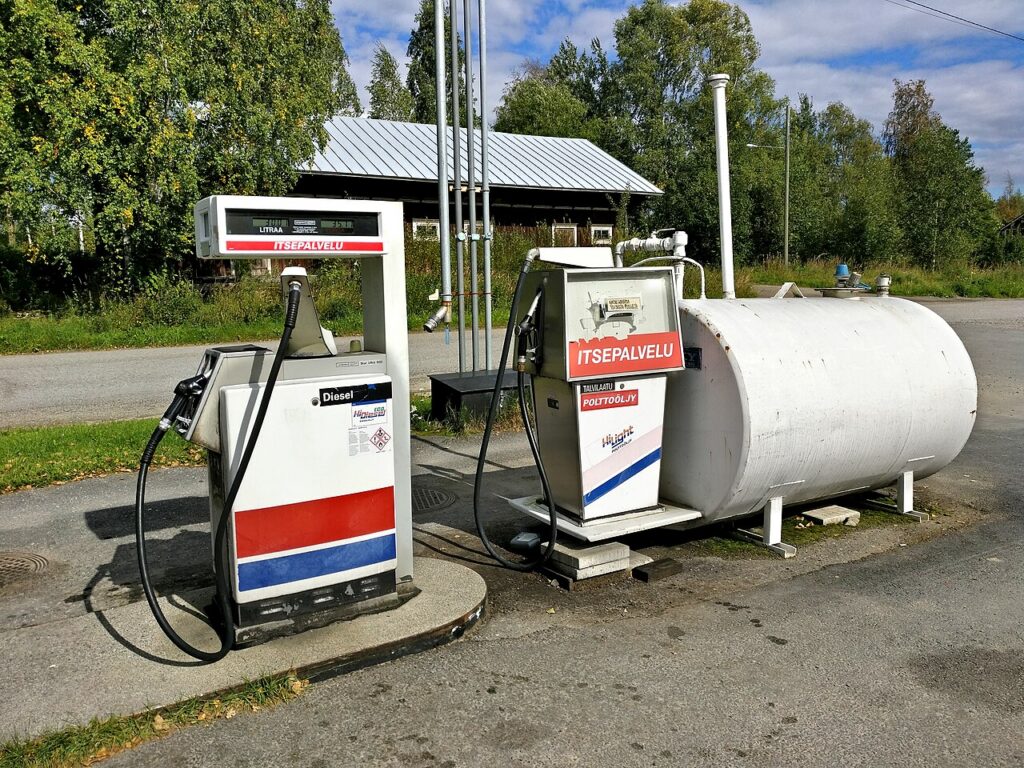
Illustrative image: diesel pump in Finland (2016), Santeri Viinamäki / Wikimedia Commons, CC BY-SA 4.0. Resized/cropped for display.
Original social post · 2026-10-13