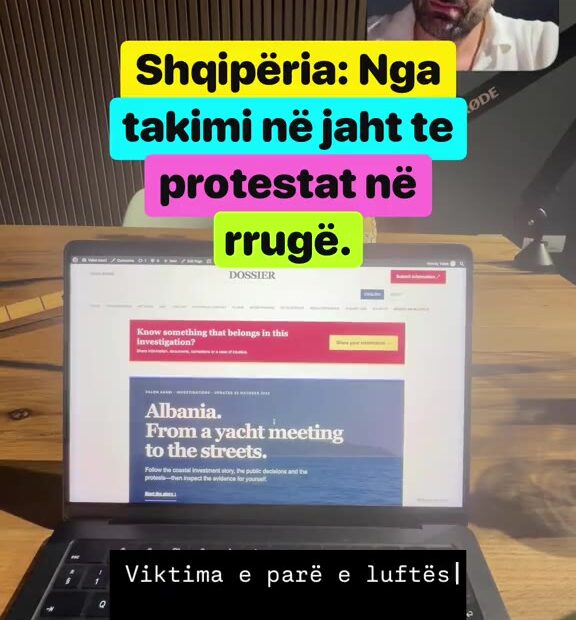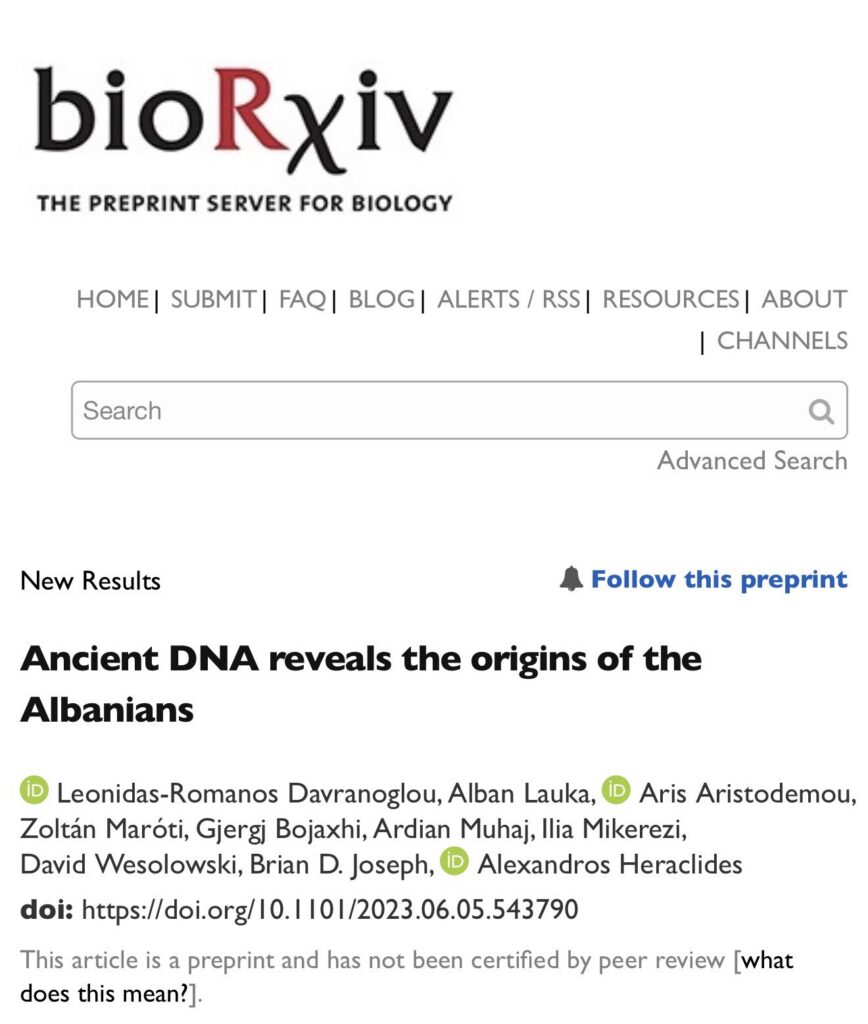
I shared a study about Albanian ancestry because the history of our roots interests me. Reading the research itself is an important step beyond sharing a headline.
The abstract reports analysis of more than 6,000 ancient genomes and 74 present-day Albanians. It finds continuity with western Balkan Bronze and Iron Age ancestry through early medieval Albania, alongside later admixture. Davranoglou and colleagues, Nature Human Behaviour, published 4 May 2026.
That is a population-history finding. It does not establish a family relationship to Alexander the Great or prove a claim about his military campaigns. Those are separate questions requiring separate evidence.
This note is based on the publicly available abstract, not a review of the full study behind the subscription. I am keeping the description within that evidence. Interest in our origins is a reason to read carefully, including where a source leaves questions open.
Original social post · 2026-10-15
October 18: continuity is not the same as an unchanged identity
In a follow-up post, I expressed my enthusiasm for DNA evidence in much stronger terms. The research supports a more precise statement: ancestry from western Balkan populations persisted, and present-day Albanians predominantly descend from the population the authors identify in early medieval Albania.
The published abstract also reports later admixture, averaging 10–20% Medieval East European-related ancestry across present-day Albanians. Genetic continuity therefore does not mean an unchanged population, nor does it by itself prove an unchanged national identity over 4,500–5,000 years. My broader language in the post should not be mistaken for the study’s conclusion. The finding is significant without extending it beyond what the researchers report.